 Gå till umu.se
From Uppsala to Umeå OR From bear to metal solution OR 50 years with microbes
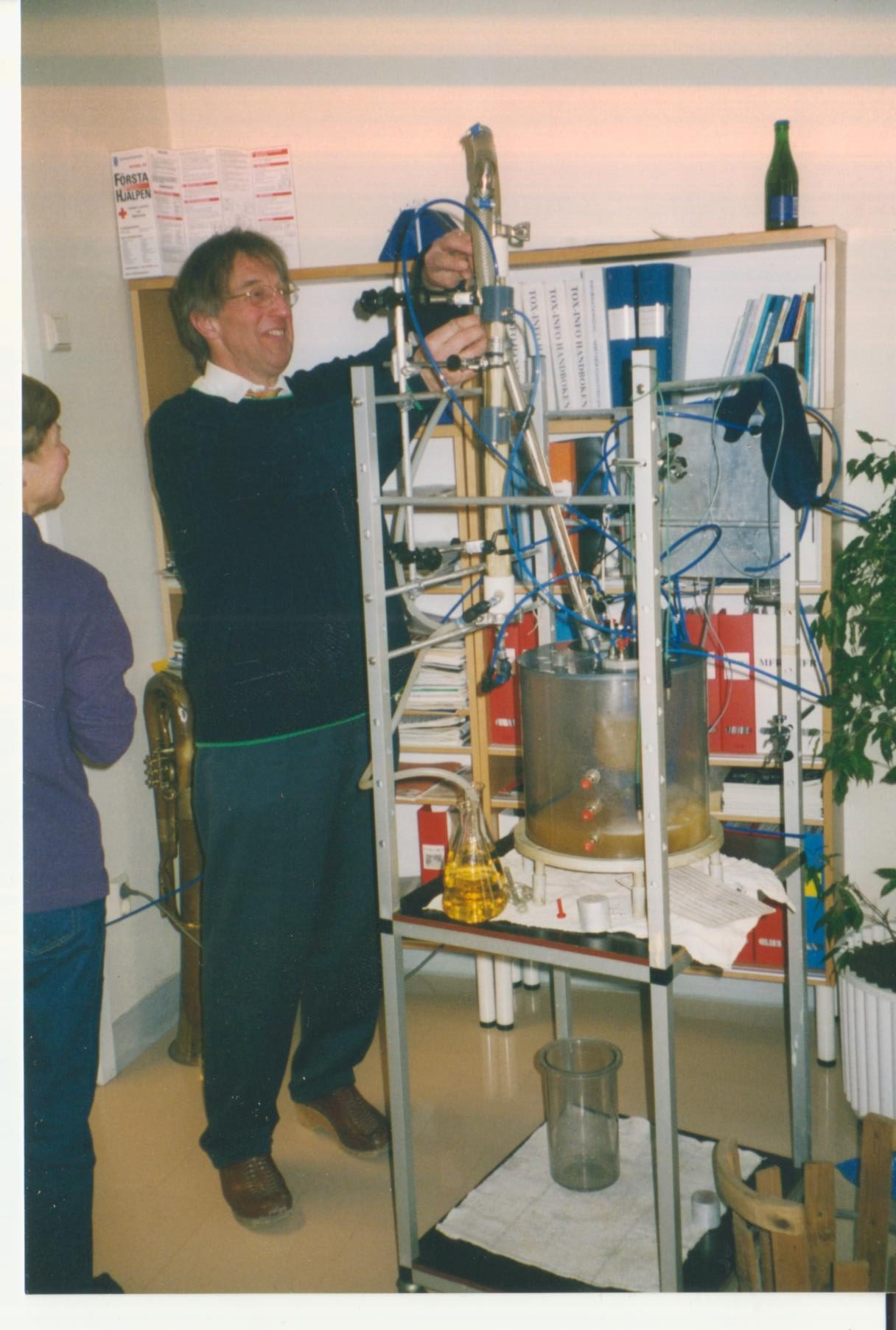
By Börje Lindström
My first visit to the northern part of Sweden was when I spent the obligatory military service in the town Sollefteå almost a year after my “Student examination” 1959 in Avesta, Dalarna.
During this year most of us students talked about what we should do after the military service.
I had no plans for Uppsala. I was more interested in engineering studies and therefore thought of Stockholm and the Royal Technical University. However, at the end of the military service one of my classmates asked me if I could accompany him to Uppsala and help him to choose between the two possibilities of rooms he had in mind. Of course I accompanied him. However, he could not choose and say no thank you to one of the hostesses. Therefore he asked me if I could take one of those rooms. After some hesitation I said OK! So I moved to Uppsala.
1960 my academic career in Uppsala started with studies in mathematics, chemistry and theoretical physics and got a B.S. 1964 at Uppsala University. What to do next?
This year the first course in microbiology had started at Uppsala University and as I was also interested in Biology, I thought why not study microbiology?
Shortly after the start of these studies my fiancée Anita suggested it was time for marriage, which took place in the Old Town of Uppsala. I had also promised to look for a job after the course in Microbiology.
Fortunately the Hans G. Bomans group at the biochemistry department, where the microbiology course was given, had announced a position in his research group. He urgently needed someone with technical interest and knowledge in microbiology and growth of bacteria. I got the job and started in 1965 after one year study of the interesting microbial world in memory of Pasteur. I was especially fascinated in how Pasteur had discovered the yeast cells chemical reactions such as fermentation and respiration.
When Hans G. Boman was appointed the first professor in Microbiology in Sweden at the University of Umeå, I did not hesitate to accompany him to this part of Sweden, nor did my wife Anita.
The first scouting trip to Umeå together with Hans G. Boman I only remember vaguely. What I remember was that it took place in his old rusty Fiat and that the start should be early in the morning 7 o`clock.
Unfortunately I was in charge of a party at our student nation V-Dala in the 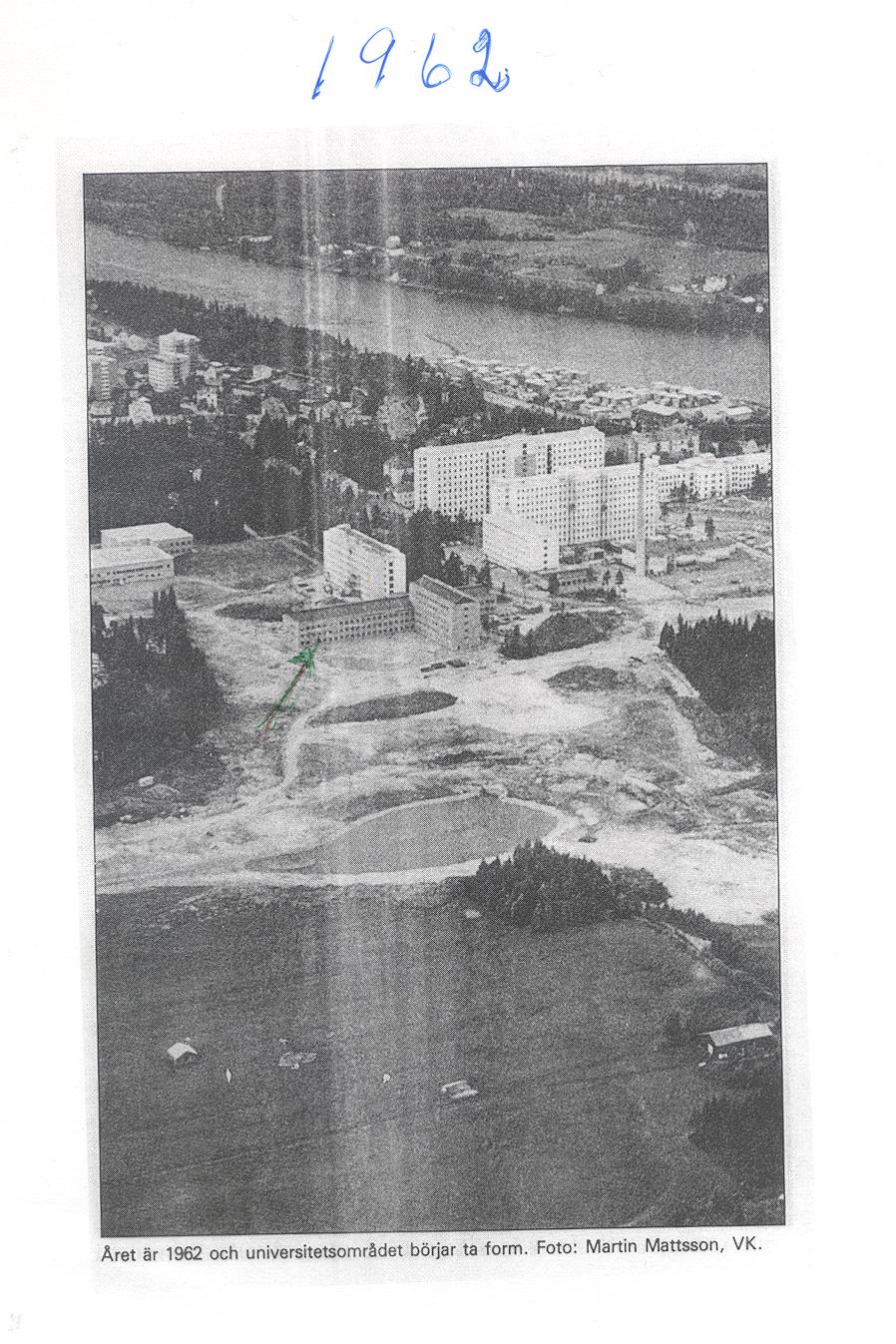 evening before the start, and I came in bed late and got only 4 hours of sleep before I was picked up by Hans G. Boman.
We had agreed to share the driving, but I succeeded to convince him that I should take a later part of the road. I do not remember anything until our first stop in Härnösand.
The second stop was in the village Röbäck south of Umeå. From there we had a splendid view of the hospital building where our department was situated (see fig.).
When Hans G. Boman had been appointed as professor in Microbiology and my family and I had moved to Umeå, the most remarkable thing I remember is that we could chose among several newly built flats in the white town Mariehem. In the flat we chose we stayed until 1972 when we moved to a country house in Stöcksjö, where we still live during the winter months.
The first year in our new department was spent with rebuilding the whole department to suit microbial research work. Especially to be able to grow bacteria in large amounts and to prepare extracts from them and to recover some interesting biochemical constituents from these bacteria. Most of this work had to be performed mainly in the cold-room. A special room was dedicated to the growth vessel called Biogen, in which we could cultivate up to 50 liter bacteria in one day and extract the desired substances from these cultures. Only one such machine existed in Europe, Brussels, and as I should be working with it, I was sent to Brussels to learn how to handle it and also to install the machine, which was ordered but not yet delivered to Umeå.
In addition to preparing the department for research we also prepared courses for education of the different student categories such as medical, dentist and natural science students. These students should have both theoretical and practical experience in specialized laboratories.
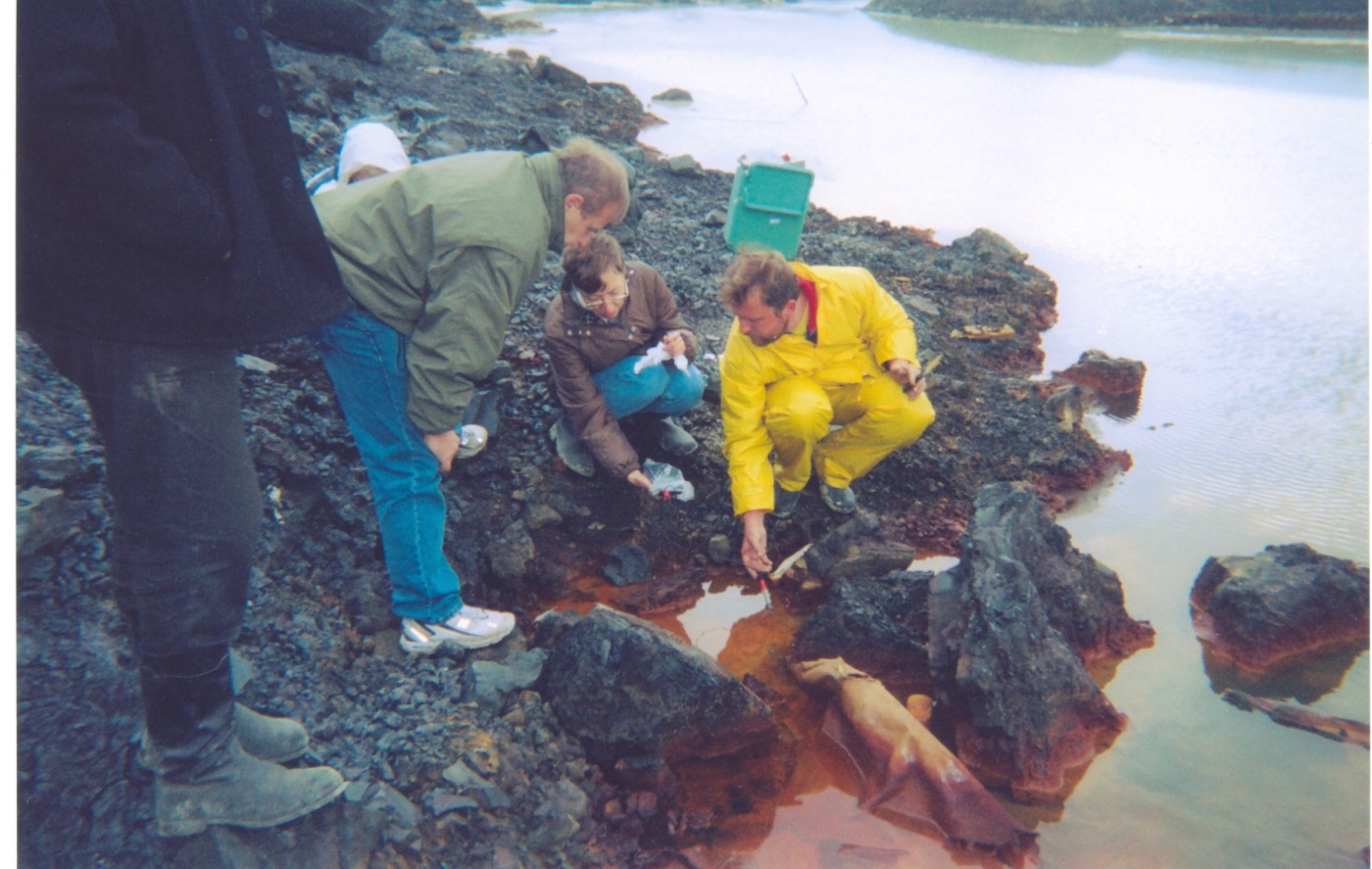
Lastly I must give my late mentor Hans G. Boman credit for that he inspired especially me and most of his co-workers to dare change research profiles when the interest changed. In my case I started with the purification of the enzyme in Escherichia coli responsible for destroying penicillin, changed my research to study the role of sulphate reducing bacteria and methane producing bacteria in the environment, and ended with using bacteria to release metals from different minerals.
Education
- S. 1964, Uppsala University
- D. 1971, Umeå University (Microbiology)
- Associate professor (docent) 1997, Umeå University
Positions
- Research Assistant at the Swedish Natural Science Research Council, 1965-1969
- Lecturer in microbiology, Umeå University, 1969